
![D&I Isn't a Nice-to-Have — It's a Business Operating System [Cross-Cultural Management #11]](https://megumirai.com/wp-content/uploads/2026/04/ccm_11_eyecatch.jpg)
In the previous article (Cross-Cultural Management #10), I explored how to design guardrails that protect non-negotiable values while allowing local adaptation.
Now, approaching the end of the series, I’ll examine why Diversity & Inclusion is indispensable — not as a moral ideal, but as a business operating system.
“D&I = promoting women” is far too narrow
When most people hear “diversity,” they think “more women in management,” “hiring people with disabilities,” or “LGBTQ+ inclusion.” These are important — but the case we studied showed something far more fundamental: D&I is directly tied to business survival.
Honestly, before this course, I also thought of D&I as “doing the socially right thing.” Not wrong per se, but the case and discussion shifted my understanding to something more urgent: D&I is not “right, therefore do it” but “must do, because the business doesn’t work without it.” This reframe was a major personal insight.
Without D&I, the business doesn’t function
The case featured a global energy company. For this organization, D&I was foundational in four ways:
1. D&I as an operating license
The energy industry is deeply entangled with national sovereignty and political risk. Governments require localization: “A certain percentage of management must be local nationals.” “Ethnic composition must be considered.” Without meeting these requirements, operations can’t even begin. As one HR leader put it: “You can’t invest in a country if you have zero employees of that nationality.” D&I was not mere morality — it was the prerequisite for accessing resources.
In class, the concept of “D&I as operating license” sparked debate: “Is that real D&I if it’s externally forced?” But the discussion converged on an important point: even when the trigger is external pressure, if the practice takes root and becomes internalized, it can become genuine D&I. The origin matters less than the process that follows.
2. Building a 20-year talent pipeline
In this industry, developing specialist engineers takes 10-15 years. “You need to recruit today at universities for the talent you’ll need in 20 years.” In that context, excluding women or specific nationalities simply narrows the pool you can’t afford to narrow. D&I was a long-term investment in future production capacity.
This “talent pipeline” argument resonated deeply with my 28 years in IT. Network engineers and security specialists also take years to develop. Yet unconscious bias at the hiring stage — “this type of person probably isn’t suited for this” or “this field is mostly men” — quietly thins the future pipeline. When I entered IT infrastructure in 1997, female engineers were rare. The baseless assumption that “women aren’t suited for this work” had been unnecessarily narrowing the industry’s talent pool for years.
3. Safety and operational efficiency
In field operations, safety is paramount. Homogeneous groups tend toward lax discipline and higher accident risk. A senior operations leader stated: “The moment a woman joins the team, safety changes.” Diversity creates productive tension that strengthens behavioral standards.
This “homogeneity breeds complacency” resonates in IT operations too. When the same people follow the same procedures repeatedly, checks become perfunctory: “It was fine last time, so it’ll be fine now.” A new team member with a different perspective asks, “Why this procedure?” “Is this risk truly covered?” — and these questions revitalize the organization’s self-correction mechanisms.
4. Adaptability to growth markets
With growth markets shifting to Asia and the Middle East, a homogeneous leadership team risks misreading market dynamics. Organizations lacking diversity can’t keep pace with diversifying markets. When the decision-making body lacks diverse perspectives, groupthink reinforces the illusion that “we’re right” — and market shifts get missed. This is organizational-level cultural cruise control, as we learned in Day 2.
At my own company, our Indian parent’s growth strategy focuses on the Asia-Pacific region. If the Japanese subsidiary only emphasizes “Japan’s unique market characteristics,” that won’t fly. We need people who can understand diverse Asian markets and articulate Japan’s positioning within that broader context — which requires diverse perspectives within our own team.
Advanced systems — but the power structure didn’t change
This company’s D&I programs were world-class. Diversity hiring rules, aspirational goals, mentoring, employee surveys — comprehensive and well-designed.
But when crisis hit in 2009 and the executive committee was restructured, what happened was — a reversion to a homogeneous, white-male-dominated composition.
“There were no candidates,” the CEO said. But the real issue was a structural pipeline defect. Women and non-Western employees had increased in field-level roles, but were virtually absent from the CEO-track core divisions.
The instructor pointed out: “Pipeline defects aren’t accidental — they’re structurally produced.” Promotion criteria, rotation patterns, mentor selection — these mechanisms unconsciously filtered out certain demographics. The gate appeared open, but invisible walls blocked the path. Systems looked equal on paper, but the operation perpetuated homogeneity. The public image concept from Day 3 applies here too: this company wanted to be seen as “a progressive D&I leader.” But under crisis pressure, the truth emerged. Public image and reality diverged at the organizational level.
Systems changed the field, but the power structure didn’t change. D&I was demanded of the frontline, but the leadership itself remained unchanged — this contradiction was the case’s essential lesson.
Hearing this, I thought of my own organization. Our Indian parent promotes D&I globally, but what about the Japanese subsidiary’s leadership? It may look diverse on paper, but how decisions actually get made is a separate question. “Having systems” and “systems actually changing the power structure” are completely different.
Was D&I internalized as a value?
Here’s the question that provoked the deepest reflection:
Understanding D&I as a “business strategy” and internalizing it as a “corporate value” are different things.
This company adopted D&I as a strategic necessity. That’s why it was taken seriously on the ground. But leadership itself didn’t grasp the need to become diverse themselves.
Result: D&I functioned in peacetime, but crisis triggered a revert to homogeneity. The frontline understood D&I’s essence; the C-suite did not.
How about your organization? Is D&I implemented as “something we must do,” or internalized as “who we are”? The difference is invisible in normal times. But it surfaces in crisis — budget cuts, layoffs, restructuring. If diversity investments are the first to go, internalization never happened.
The instructor closed with a question I keep returning to: “Is D&I a means or an end?” Many companies adopt D&I as a “means to achieve business goals.” That’s not wrong. But as long as it remains a means, it gets discarded when goals change. D&I persists in corporate DNA only when it becomes the end itself — “this is who we want to be.” My own company is honestly still in the “means” stage. But recognizing that is itself progress. Awareness of being at the “means” stage, combined with the intent to move toward “end,” is a more honest starting point than unexamined claims of “we do D&I.”
Recommended reading
For understanding D&I as business strategy
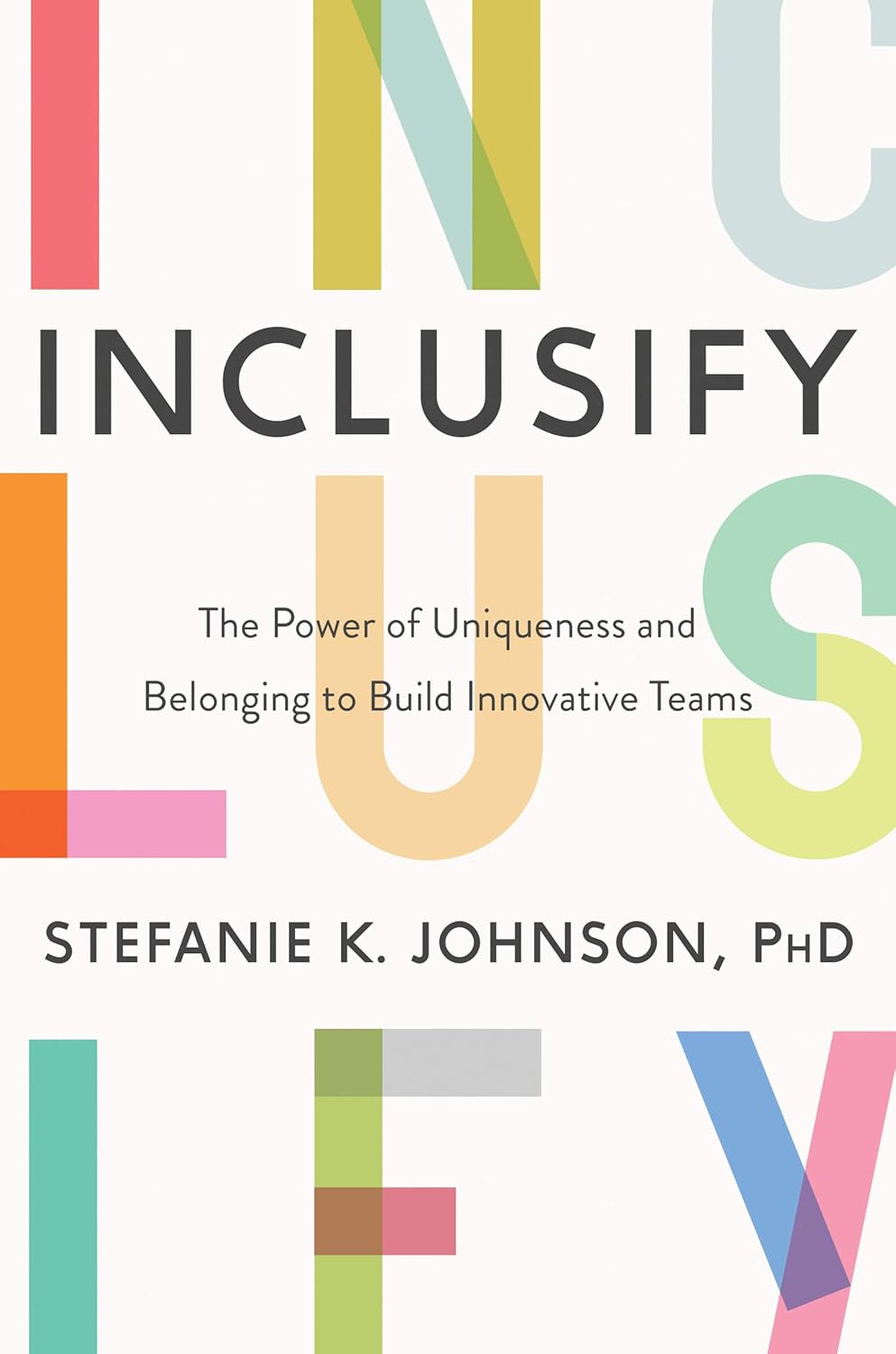
Stefanie K. Johnson, Inclusify: The Power of Uniqueness and Belonging to Build Innovative Teams (Harper Business)
Johnson combines research with practical strategies, showing how leaders can simultaneously honor individual uniqueness and create belonging — the two halves of inclusion that drive innovation and performance.

→ Next and final: [Cross-Cultural Management #12] brings together all six sessions — reflecting on how the walls we face are not just across borders, but right next to us and inside us.